Kenya Money Exchange Rate In U.s An Insightful Overview

The kenya money exchange rate in u.s plays a crucial role in global finance, impacting everything from tourism to trade. Understanding the dynamics behind this rate can empower individuals and businesses to make informed decisions. As the exchange rate fluctuates due to various economic and political factors, being educated on these aspects helps mitigate risks and seize opportunities.

From analyzing historical trends to exploring the role of the Central Bank of Kenya, this overview delves into the intricacies of how the exchange rate operates, its influences, and what the future might hold. With recent developments and expert insights, we aim to provide a comprehensive understanding of this essential subject.

Understanding the Current Kenya Money Exchange Rate in the U.S.

The exchange rate between the Kenyan Shilling (KES) and the U.S. Dollar (USD) is influenced by a variety of factors that reflect the economic relationship between the two countries. Understanding these influences can help individuals and businesses navigate currency conversions more effectively. The primary factors affecting this exchange rate include differences in inflation rates, interest rates, and economic stability. For instance, if Kenya experiences higher inflation than the U.S., the value of the Shilling could depreciate against the Dollar, making imports costlier while potentially boosting exports.

Recent fluctuations in the exchange rate show that over the past year, the KES has seen a range between 100 to 110 against the USD, with notable dips linked to political instability and economic reports.

Historical Trends of the Kenya Money Exchange Rate Compared to the U.S.

Examining historical trends reveals significant shifts in the KES/USD exchange rate, often triggered by major economic or political events. Over the last decade, the Kenyan Shilling has experienced both highs and lows, reflecting the country’s economic journey.Key historical events that impacted the exchange rate include:

  • The 2007-2008 post-election violence, which caused a dramatic depreciation of the Shilling.
  • Global economic crises, such as the 2008 financial crash that affected remittances and trade.
  • The ongoing impacts of the COVID-19 pandemic, which led to increased economic uncertainty and fluctuations in currency value.

The last decade has shown a trend of gradual depreciation of the Shilling, influenced by ongoing economic reforms and external economic pressures.

The Role of the Central Bank of Kenya in Exchange Rate Management

The Central Bank of Kenya (CBK) plays a crucial role in managing the exchange rate through various monetary policies and interventions. The CBK’s primary objective is to maintain economic stability and control inflation, which directly impacts currency value.To stabilize the Shilling, the CBK engages in:

  • Market interventions, where they buy or sell foreign currencies to influence the exchange rate.
  • Setting interest rates which can attract foreign investment, thereby boosting the currency.
  • Implementing foreign exchange reserves management strategies to ensure liquidity and stability.

These interventions have shown varying degrees of effectiveness, with some periods resulting in greater stability than others.

Comparing the Kenya Money Exchange Rate with Other Major Currencies

When assessing the Kenya money exchange rate, it’s insightful to compare the Kenyan Shilling against other major currencies, such as the Euro (EUR) and the British Pound (GBP).Here’s a comparative table showing the exchange rates:

Currency Exchange Rate (KES)
U.S. Dollar 110
Euro 120
British Pound 140

These comparisons are essential for international trade as they determine the competitiveness of Kenyan exports and the cost of imports. A weaker Shilling makes imports more expensive, while a stronger Shilling can hurt local exporters by making their products pricier abroad.

Impact of Economic Indicators on the Kenya Money Exchange Rate

Key economic indicators significantly influence the Kenya money exchange rate. These include inflation rates, interest rates, and overall economic growth.For example:

  • High inflation in Kenya can lead to a depreciation of the Shilling as purchasing power decreases.
  • Changes in interest rates can either attract or deter foreign investment, affecting currency strength.
  • Recent economic reports, such as GDP growth rates, have led to immediate reactions in the currency market.

An understanding of these indicators is vital for investors as they gauge the economic health of a nation and its currency stability.

Currency Exchange Services and Their Impact on Individuals

When it comes to exchanging Kenyan Shillings to U.S. Dollars, various services are available, ranging from banks to online platforms. Each service comes with its own set of advantages and drawbacks.Factors to consider when choosing an exchange service include:

  • Exchange rates offered by the service.
  • Transaction fees and service charges.
  • Convenience and accessibility of the service.

Individuals should also be aware of the costs associated with different methods, as these can significantly affect the total amount received during currency exchanges.

Future Predictions for the Kenya Money Exchange Rate

Experts’ predictions suggest a mixed outlook for the Kenya money exchange rate, influenced by both local and global economic factors. Potential influences on future rates include:

  • Global economic recovery post-COVID-19, which could stabilize trade.
  • Local political stability and governance reforms that may boost investor confidence.
  • Changes in commodity prices, particularly exports like tea and coffee, which significantly affect the economy.

Monitoring these predictions is crucial for travelers and businesses to make informed decisions regarding currency exchanges.

The Influence of Political Stability on the Kenya Money Exchange Rate

Political events in Kenya have a direct impact on the exchange rate, with stability playing a key role in currency confidence. The relationship between governance and economic policies is critical. For example:

  • Political turmoil or uncertainty can lead to depreciation of the Shilling as investors pull out.
  • Stable governance tends to attract foreign investment, supporting a stronger currency.
  • Recent elections or policy shifts have historically influenced the exchange rate significantly.

These factors underscore the importance of political stability for a robust economy and currency value.

Strategies for Individuals and Businesses to Manage Currency Exchange Risks

To mitigate risks associated with fluctuating exchange rates, individuals and businesses can employ several strategies.Effective risk management strategies include:

  • Utilizing hedging techniques, such as forward contracts, to lock in exchange rates.
  • Diversifying currency holdings to spread risk across multiple currencies.
  • Staying informed on market trends and economic indicators to make timely decisions.

These strategies are essential for minimizing potential losses in an unpredictable currency environment.

The Impact of Tourism and Remittances on the Kenya Money Exchange Rate

Tourism and remittances play a significant role in influencing the Kenya money exchange rate. Tourism generates substantial foreign currency inflows, which boosts the Shilling. Key points include:

  • The volume of international tourists directly correlates with the demand for local currency.
  • Remittances from Kenyans living abroad are a vital source of foreign currency, supporting local consumption and investment.
  • Recent trends indicate a rise in both tourism and remittances, positively impacting the exchange rate.

Understanding these dynamics is crucial for grasping how external factors shape local currency values.

Last Recap

Kenya Africa Map with Provinces and Capitals

In conclusion, the kenya money exchange rate in u.s is not just a number; it reflects the broader economic landscape and serves as a vital indicator for various stakeholders. By staying informed about historical trends, current events, and potential future shifts, individuals and businesses can navigate the complexities of currency exchange more effectively. As we look ahead, awareness and adaptability will be key in thriving amidst the ever-changing financial environment.

Q&A

What is the current exchange rate of the Kenyan Shilling to the U.S. Dollar?

The current exchange rate fluctuates frequently, so it’s best to check real-time data for the most accurate figure.

How does political stability affect the exchange rate?

Political stability tends to strengthen a country’s currency, as it fosters investor confidence and economic growth.

What are the best ways to exchange Kenyan Shillings for U.S. Dollars?

Options include banks, currency exchange services, and online platforms, each with varying fees and exchange rates.

How can I avoid losses due to fluctuating exchange rates?

Consider using hedging strategies or fixed exchange rates to minimize risk, and stay informed about market trends.

What role do remittances play in the Kenya money exchange rate?

Remittances can boost demand for the Kenyan Shilling, influencing its exchange rate positively against the U.S. Dollar.
Us Dollar Vs Australian Money An Insightful Comparison

As us dollar vs australian money takes center stage, this opening passage beckons readers into a world crafted with good knowledge, ensuring a reading experience that is both absorbing and distinctly original.

The US Dollar and the Australian Dollar are more than just currencies; they represent the economic pulse of two nations. Over the past century, these currencies have evolved significantly due to historical events, economic shifts, and changing global perceptions. Understanding their dynamics not only sheds light on their current standing but also reveals the intricacies of international finance, trade, and investment opportunities.

Understanding the Historical Context of the US Dollar and Australian Dollar

The US Dollar (USD) and the Australian Dollar (AUD) have fascinating histories that reflect the economic trajectories of their respective nations. Over the last century, these currencies have evolved through various global events, shaping their values and perceptions in the international market.The US Dollar emerged as a dominant currency post-World War II, bolstered by the Bretton Woods Agreement, which established it as the world’s primary reserve currency.

Meanwhile, the Australian Dollar was introduced in 1966, replacing the Australian pound. Significant events, like the 2008 financial crisis and recent trade tensions, have influenced how both currencies are valued globally. Understanding these events gives insight into how global economic shifts have affected perceptions of the USD and AUD.

Examining the Current Exchange Rate Dynamics

As of now, the exchange rate between the US Dollar and the Australian Dollar fluctuates based on various economic factors. Currently, 1 USD typically exchanges for around 1.40 AUD, but this value can change rapidly due to market conditions.Several factors affect these exchange rates:

  • Inflation Rates: Higher inflation in one country can lower the value of its currency.
  • Interest Rates: A rise in interest rates can attract foreign capital, boosting the currency’s value.
  • Economic Indicators: Reports such as GDP growth, employment statistics, and trade balances can significantly influence investor sentiment and currency value.

Recent trends show a strengthening of the AUD against the USD, driven by rising commodity prices and a recovering Australian economy post-pandemic. Looking forward, economic forecasts suggest possible fluctuations influenced by interest rate changes and geopolitical developments.

Evaluating the Impact of Political Stability on Currency Values

Political events in both the United States and Australia significantly impact their respective currency valuations. A stable political environment tends to boost investor confidence, leading to a stronger currency.In the US, political stability has been essential for maintaining the USD’s status as a global reserve currency. Conversely, political turmoil or contentious elections in Australia can lead to a depreciation of the AUD.

The implications of trade agreements also play a crucial role; strong diplomatic relations can bolster currency strength through increased trade and investment.

Analyzing Economic Indicators Relevant to Both Currencies

Key economic indicators provide valuable insights into the strength of the USD and AUD. Important indicators include:

  • Unemployment Rates: A decrease in unemployment rates typically signals economic strength, positively affecting currency values.
  • GDP Growth: Higher GDP growth rates often correlate with stronger currencies, as they indicate a healthy economy.
  • Trade Balances: A trade surplus can increase demand for a country’s currency, while a deficit can weaken it.

For instance, Australia’s reliance on commodities means that fluctuations in the iron ore market can lead to significant changes in the AUD’s value.

Exploring the Role of Central Banks in Currency Management

The management of the US Dollar and Australian Dollar is heavily influenced by their respective central banks: the Federal Reserve (Fed) and the Reserve Bank of Australia (RBA). The Fed plays a critical role in setting monetary policy, including interest rates, which directly impact currency value. For example, when the Fed raises interest rates, it often leads to a stronger USD as investors seek higher returns.

Similarly, the RBA’s monetary policy decisions can have immediate effects on the AUD, influencing everything from inflation to employment rates.Quantitative easing, employed by both central banks during economic downturns, can also affect exchange rates. By injecting liquidity into the economy, these policies can lead to currency depreciation if overused.

Understanding Investment Opportunities in Forex Trading

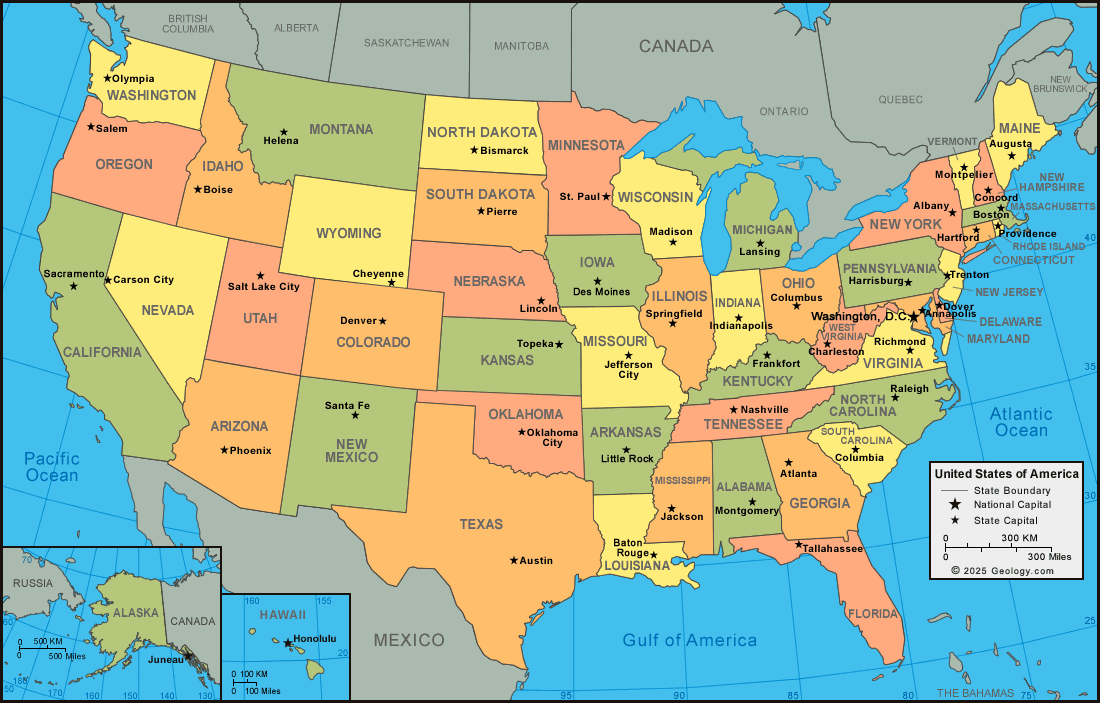
Current Map Of The Us - Emilie Nicolette

Forex trading presents significant opportunities for investors dealing with the US Dollar and Australian Dollar. This market operates 24/5, allowing traders to buy and sell currencies based on economic data and market sentiment.When trading these currencies, it’s crucial to employ strategies such as:

  • Technical Analysis: This involves studying price charts and patterns to predict future movements.
  • Fundamental Analysis: Evaluating economic indicators to make informed trading decisions.

However, it’s important to be aware of the risks involved, including market volatility and geopolitical events that can lead to sudden currency fluctuations.

Investigating the Influence of Commodity Prices on Currency Value

Commodity prices, particularly for gold and iron ore, significantly influence the Australian Dollar. As Australia is a major exporter of these commodities, higher prices typically lead to a stronger AUD. For instance, when iron ore prices surged in 2021, the AUD appreciated against the USD.Similarly, oil prices are closely tied to the value of the US Dollar. A rise in oil prices often leads to a stronger USD as it increases revenue for oil-exporting countries.

Conversely, fluctuations in commodity markets can lead to rapid changes in currency values, illustrating the interconnectedness of these economic factors.

Assessing the Cultural and Social Factors Affecting Currency Perception

Cultural attitudes towards money and investments can profoundly affect perceptions of the US Dollar and Australian Dollar. For instance, in the US, a culture that encourages investment can lead to a stronger USD due to increased demand.Social factors, such as consumer behavior and spending habits, also play a role. In both countries, a strong consumer confidence index often correlates with a robust currency.

Economic downturns can shift these perceptions, affecting both currencies’ strength in the global market.

Comparing Remittance Flows between the US and Australia

Remittance flows between the US and Australia represent a significant economic factor, influencing currency demand. Many Australians living in the US send money back home, impacting the AUD’s value.Demographic factors contribute to these remittance patterns, with young professionals often seeking opportunities in the US while maintaining ties to Australia. The economic implications of remittances are substantial, bolstering local economies and affecting overall currency strength.

Investigating the Future of the US Dollar and Australian Dollar Relationships

Looking ahead, the relationship between the US Dollar and Australian Dollar could experience shifts based on current trends. Emerging markets and global challenges, such as climate change and technological advancements, may reshape currency importance.As global economies evolve, the relative strength of these currencies could change, influenced by trade relationships and economic policies. Keeping an eye on these developments is essential for investors and policymakers alike as they navigate the complex landscape of international finance.

Last Word

In summary, the relationship between the US Dollar and the Australian Dollar is complex, influenced by historical legacies, economic indicators, and geopolitical stability. As we look towards the future, keeping an eye on these factors will be crucial for investors and casual observers alike, ensuring they stay informed in an ever-changing economic landscape.

Essential FAQs

What factors influence the US dollar to Australian dollar exchange rate?

Factors include inflation rates, interest rates, economic indicators, political stability, and commodity prices.

How do political events affect these currencies?

Political events can influence investor confidence, leading to fluctuations in currency valuation based on perceptions of stability or uncertainty.

Why is Forex trading significant for these currencies?

Forex trading provides opportunities for profit through currency exchange, impacting their demand and value in the global market.

How do commodity prices impact the Australian dollar?

As Australia is a major exporter of commodities, rising commodity prices can strengthen the Australian dollar due to increased demand for its exports.

What future trends might affect the US dollar and Australian dollar relationship?

Emerging market dynamics, global economic challenges, and changes in trade relationships are likely to shape the future of these currencies.